Mahi-mahi are the fish most first-time anglers dream about: acrobatic, colorful and delicious. Palm Beach is one of the best places in Florida to catch them.
- Season Most of the year, strongest from spring through fall
- Where Offshore, along weedlines and color changes at the edge of the Gulf Stream
- How Trolling, then pitching live or cut bait to fish found under floating weed
- Good eating Yes: firm, mild, white meat
- Good for First-timers, families and anyone who wants a fish that fights
What is a mahi-mahi?
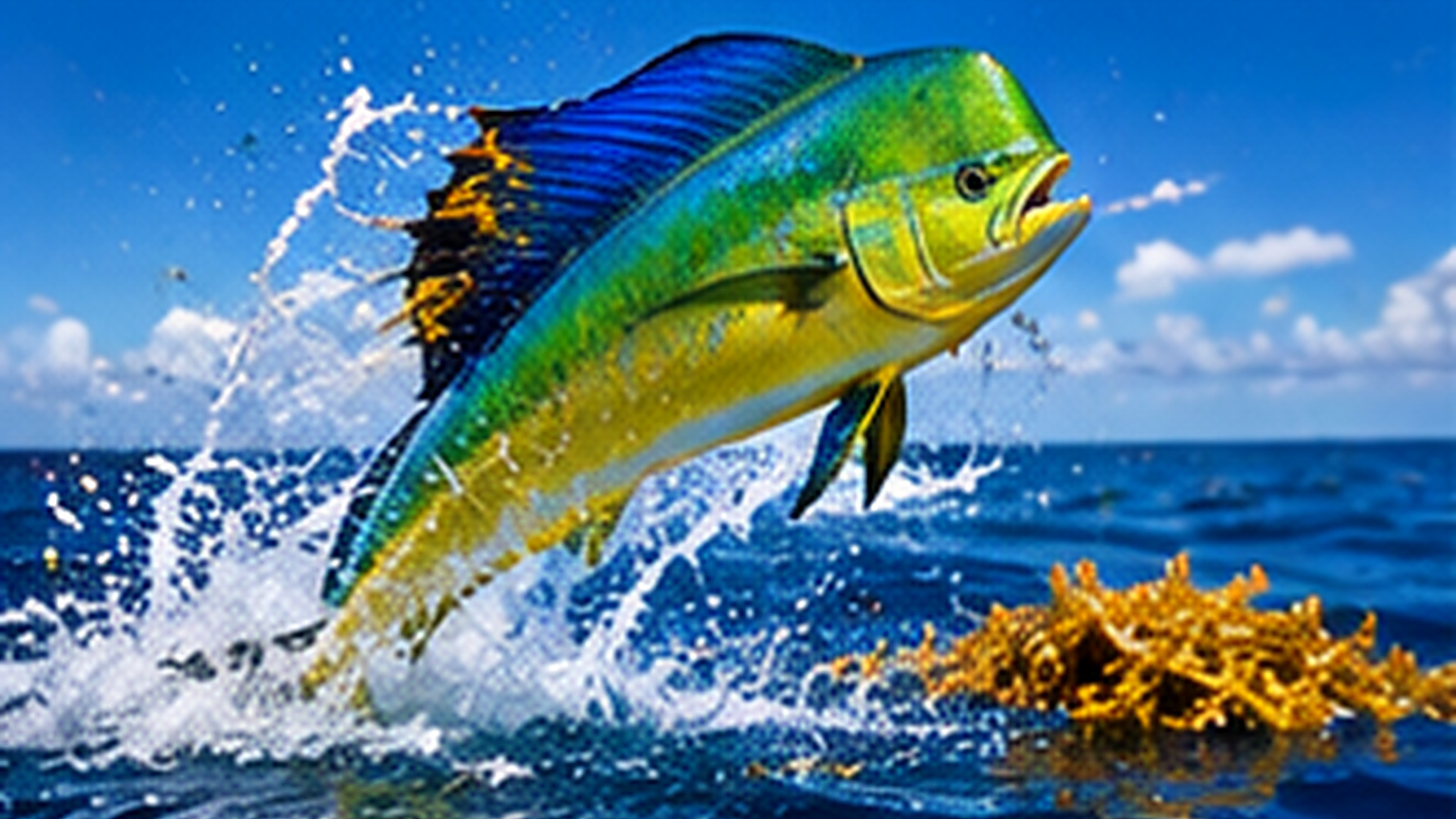
Mahi-mahi (also called dolphinfish, and "dorado" in many places) is a fast-growing open-water fish. It has a blunt forehead on the males (called bulls), a long dorsal fin, and a flash of gold, green and electric blue that fades soon after the fish leaves the water. It has nothing to do with the mammal called a dolphin.
Mahi grow quickly and live short lives, which is why the fishing can be so good: there are always new fish coming through. Smaller fish often travel in schools. Big bulls tend to be loners or pairs.
Why Palm Beach is a mahi hotspot
The Gulf Stream runs close to shore off Palm Beach County, so blue water and the weedlines that collect along its edges are only a short run from the inlet. Mahi follow floating weed, driftwood and debris because small baitfish and flying fish hide there. Find the weed, and you often find the fish. Read more about why this works in how the Gulf Stream shapes our fishing.
When to fish for mahi
You can catch mahi in every month, but the best numbers usually arrive in spring and hold through summer and into fall. In winter the fish tend to be fewer and larger, and strong north winds can make it harder to reach them. For a month-by-month look, see our fishing season guide.
How we catch them
- Trolling: we run lines behind the boat past weedlines, color changes and floating debris. A strike usually means more fish are nearby.
- Pitching bait: when we find a school, we stop the boat and pitch live or cut bait. Hooked fish often keep the rest of the school circling the boat, which makes for fast action.
- Spotting: birds working over the water, a drifting pallet or a clump of sargassum are all signs worth checking.
What to expect when one hits
Expect a hard run, then a series of jumps. Keep the rod tip up, keep steady pressure and listen to the mate. Mahi are strong but not stubborn: most are boated within several minutes. Photos are quick because the colors fade, so have your phone ready before the fish comes aboard.
Keeping and cooking mahi
Mahi are among the best-eating fish in the ocean. The meat is firm, lean and mild, great grilled, blackened, pan-seared or in fish tacos. Ice them right away so the meat stays at its best. We cover handling and recipes in cooking your catch. Bag and size limits apply and can change, so check the current rules with your captain.
Ready to put this to work? Request a trip with Good Mojo and tell us what you want to catch, or send us a question first.
Frequently asked questions
When is mahi season in Palm Beach?
Mahi-mahi can be caught most of the year off Palm Beach. Spring through fall is usually the most productive stretch, with the heaviest numbers of fish.
How big are mahi-mahi?
Most fish caught on charters are school-sized, a few pounds up to around 10 or 15 pounds. Bulls over 20 pounds are possible and always a thrill.
Is mahi-mahi good to eat?
Yes. Mahi has firm, mild, white meat and is one of the most popular fish on restaurant menus. It is best eaten fresh and iced right after the catch.
Do I need experience to catch mahi?
No. Mahi are a great choice for beginners because they bite aggressively and the crew handles the rigging and baiting.